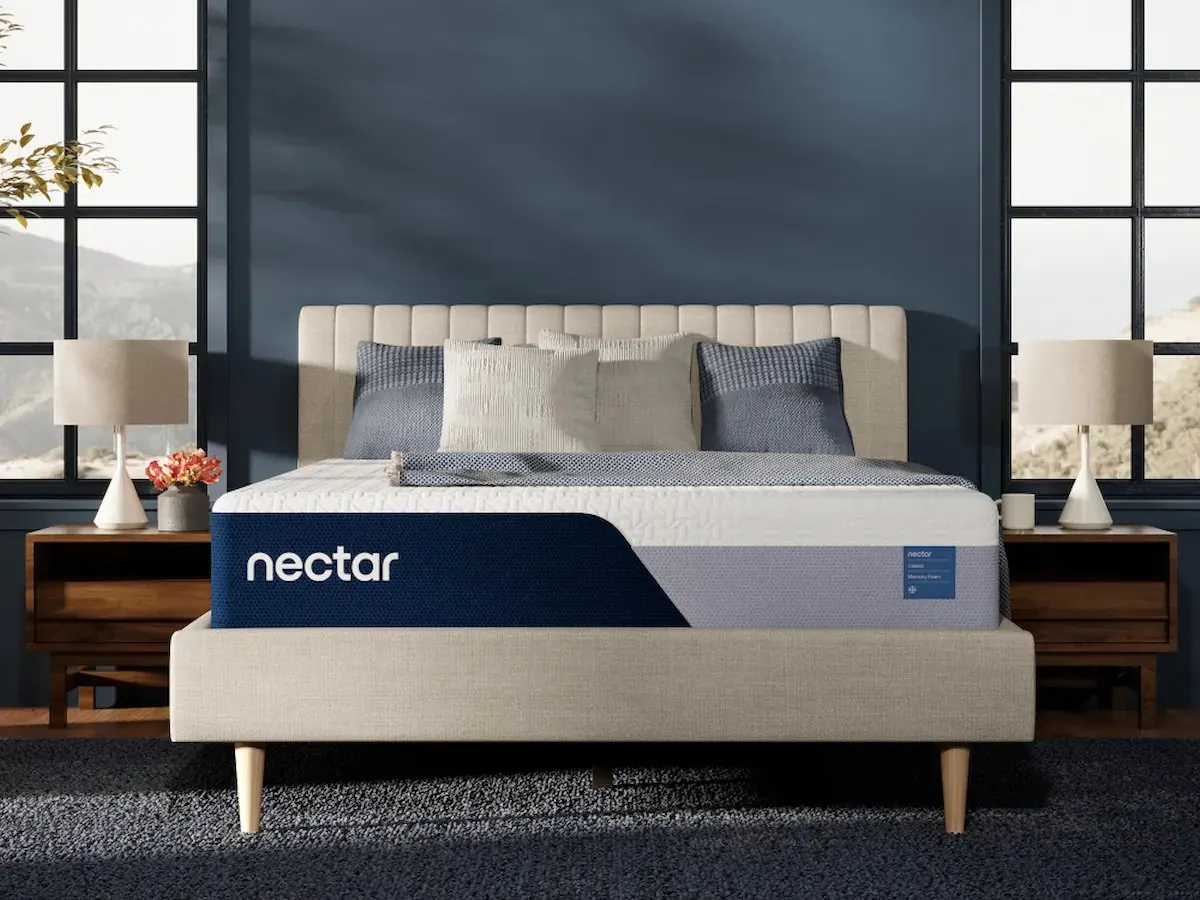
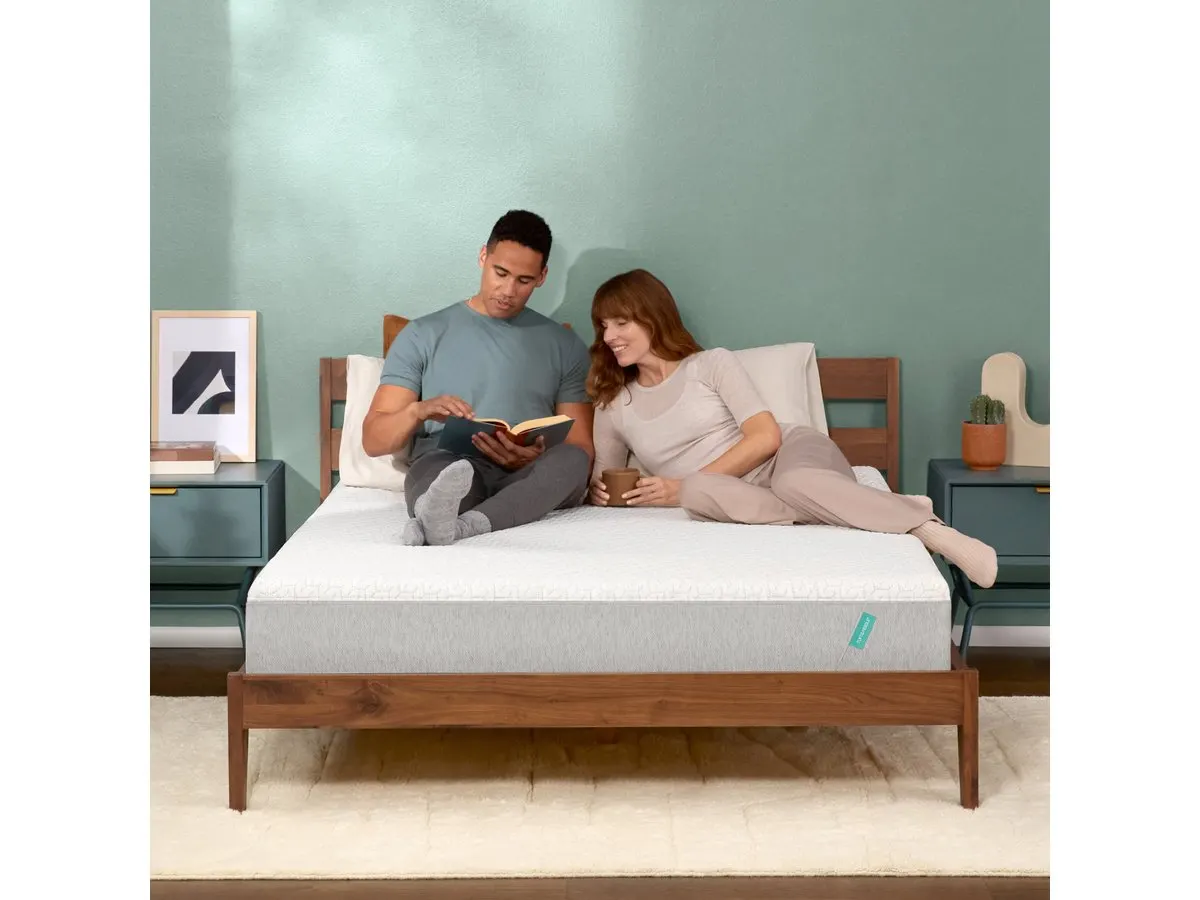
Side-by-side mattress testing · 144+ comparisons published
Quick Specs Comparison
Key Advantages
Why Choose Nectar
- 365-night trial vs 100 nights
- Forever warranty vs 10 years
- Superior motion isolation for couples
- 2 inches taller for more support layers
- Better pressure relief for side sleepers
Why Choose Tuft & Needle
- $54 cheaper at Queen size
- T&N Adaptive foam sleeps cooler than memory foam
- More responsive — easier to change positions
- Available at Target and other retailers
- Lighter and easier to move
Lab Verdict
Cooling was a wash — both mattresses landed within half a degree of each other after 60 minutes of body heat. Couples should note that the Nectar dampened motion more aggressively (0.06g peak vs. 0.11g). Side sleepers will feel less shoulder pressure on the Nectar (peak 29 mmHg vs. 32 mmHg). Perimeter compression was nearly identical — neither bed is the obvious pick on edge support alone. Responsiveness was comparable; repositioning effort should feel similar on either.
| Metric | Nectar | Tuft & Needle | Edge |
|---|---|---|---|
| Cooling (60-min Δ°F) | 3.3°F | 3°F | Tuft & Needle |
| Motion isolation (g) | 0.06g | 0.11g | Nectar |
| Edge sinkage | 2.1" | 2.1" | Tie |
| Shoulder pressure (mmHg) | 29 mmHg | 32 mmHg | Nectar |
| Response time (s) | 1.2s | 1.2s | Tie |
| Off-gassing | 1 days | 2 days | Nectar |
Median of 3 trials, 68°F climate-controlled lab. DH/KW / KW/BT · scoring vv2.1.
In-Depth Analysis
Nectar and Tuft & Needle are two of the most popular budget mattresses available, but they use different foam technologies that create distinct sleep experiences. Nectar uses traditional gel-infused memory foam for deep contouring, while Tuft & Needle developed their proprietary T&N Adaptive foam for a more responsive, less body-hugging feel.
The comfort difference is immediately noticeable. Nectar provides that classic memory foam 'hug' — you sink in gradually and the foam slowly conforms to your body shape. Tuft & Needle's Adaptive foam responds more quickly, providing pressure relief without the sinking sensation. If you've ever felt 'trapped' in memory foam, T&N's responsiveness may appeal to you.
At 12 inches vs 10 inches, Nectar provides more material and support layers. This translates to better motion isolation (9.0 vs 8.0), better edge support (7.2 vs 6.5), and more durability over time. The extra foam density means Nectar is less likely to develop body impressions during its lifespan.
Tuft & Needle's advantages are subtle but meaningful. The Adaptive foam sleeps slightly cooler than Nectar's memory foam, and the more responsive surface makes it easier to change sleeping positions throughout the night. It's also lighter and easier to move, which matters for apartment dwellers or anyone who rotates their mattress regularly.
Nectar's trial and warranty tower over T&N's. At 365 nights vs 100 and a forever warranty vs 10 years, Nectar provides substantially more buying protection for just $54 more. The math strongly favors Nectar unless you specifically prefer T&N's responsive foam feel or need a mattress you can test at Target.
Our Verdict
Nectar wins on comfort depth, motion isolation, trial period, and warranty. Tuft & Needle wins on responsiveness, cooling, and retail availability. For $54 more, Nectar provides a notably better mattress with dramatically better protection — making it the smarter buy for most people.
Buying Advice
Choose Nectar if you want deep memory foam contouring, better motion isolation, and the best trial/warranty in the budget category
Choose Tuft & Needle if you prefer a responsive foam feel, sleep hot, or want to test at Target before buying
Side sleepers will generally prefer Nectar's deeper pressure relief for hips and shoulders
Combination sleepers who switch positions frequently may prefer Tuft & Needle's more responsive surface
Both are CertiPUR-US certified — neither has a meaningful advantage in materials safety