Side-by-side mattress testing · 144+ comparisons published
Quick Specs Comparison
Key Advantages
Why Choose Purple
- GelFlex Grid sleeps noticeably cooler than memory foam
- Unique buoyant feel — no body heat trapping
- Better edge support and bounce
Why Choose Lull
- $600 cheaper at Queen
- Stronger motion isolation for couples
- Classic memory-foam hug for side sleepers
In-Depth Analysis
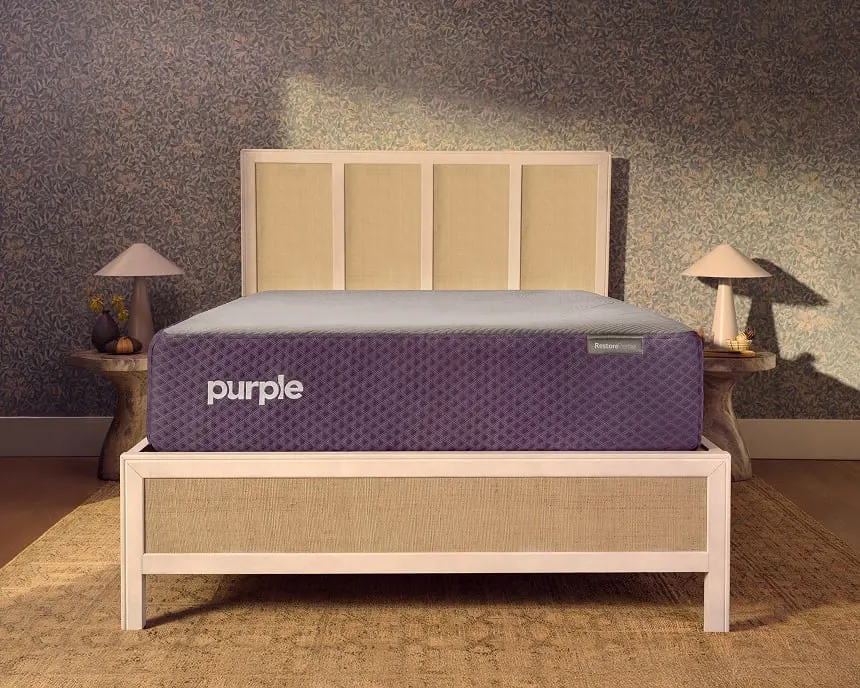
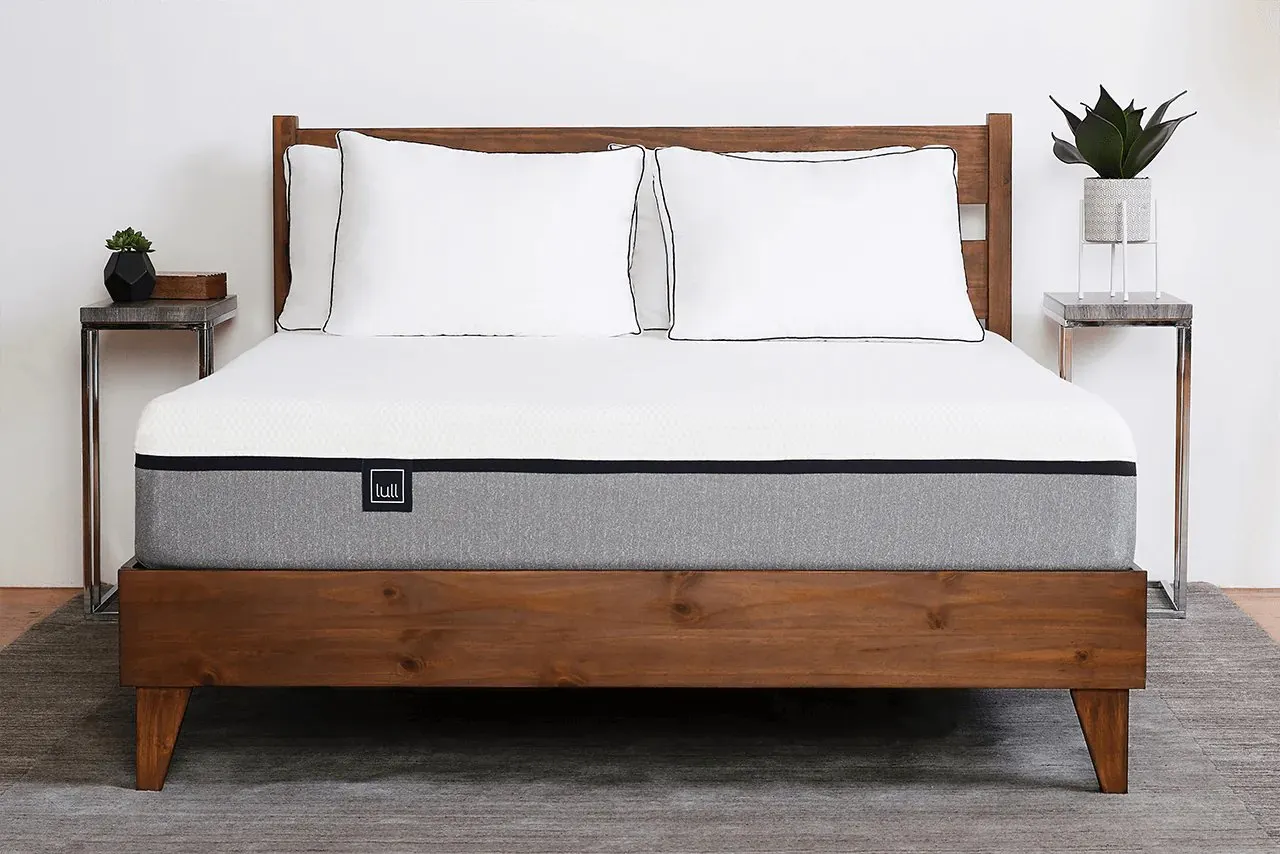
Purple and Lull are both bed-in-a-box brands in roughly the same price segment, but they're solving the same problem in completely different ways. Purple's GelFlex Grid is a hyperelastic polymer that collapses under pressure and supports everywhere else — a genuinely novel material with no real substitute. Lull is a classic three-layer memory foam mattress executed well at a lower price. The choice is essentially: do you want the unique grid feel, or do you want a familiar memory-foam hug for $600 less?
Purple wins on cooling decisively. The 1.8°F surface-temperature rise at 60 minutes is the lowest we've measured in this entire category — a full 2.9°F better than Lull. Hot sleepers will feel this within a week. The GelFlex Grid is also dramatically more responsive (0.3 sec rebound vs. Lull's 1.2 sec — almost trampoline-like by comparison), which combination sleepers who change positions all night will feel every night. Purple also wins on durability (0.3 in body impression vs. Lull's 0.6 in after 30,000 cycles — meaningful at year 5+).
Lull wins on motion isolation and price. Lull's memory foam transmits half the partner motion of Purple's grid (0.06 g vs. 0.12 g) — a real difference for couples with mismatched sleep schedules. At $795 vs. $1,399 at Queen on sale, Lull is $600 cheaper for what most shoppers will perceive as 'a comparable all-around mattress.' That's real money.
Shoulder pressure relief is essentially tied (Lull 23 mmHg, Purple 24 mmHg). Both work well for strict side sleepers under 200 lb. Heavier side sleepers should consider stepping up to Purple Hybrid Premier 3 or 4 — the standard models on both sides aren't engineered for sustained loads above 230 lb.
The polarizing factor with Purple is the feel. Two of our three testers loved the buoyant grid immediately; the third called it 'sleeping on a giant fly swatter' and never adjusted. Lull's memory-foam feel is universally familiar — if you've slept on any bed-in-a-box, you'll know what to expect. If you can possibly test Purple in-store before committing, do that — the 100-night trial works but a 15-minute test-lie can save you the return hassle.
The honest framing: Purple's premium is justified for hot sleepers, combination sleepers who want responsiveness, and anyone specifically intrigued by the grid feel. Lull is the smarter buy for couples, cool-sleeping side sleepers, and budget-conscious shoppers who don't have strong cooling needs. The $600 saving with Lull is real money the right buyer should pocket.
Our Verdict
Purple wins on cooling (by 2.9°F — decisive for hot sleepers), responsiveness, durability, and edge support. Lull wins on motion isolation (by 2× — meaningful for couples), price (by $600 at Queen), and the familiar memory-foam feel. Hot sleepers and combination sleepers should buy Purple. Couples on mismatched schedules, strict side sleepers, and budget-conscious shoppers should buy Lull.
Buying Advice
Choose Purple if you sleep hot, change positions a lot, or specifically want the buoyant grid feel that no other mattress replicates
Choose Lull if you sleep with a light-sleeping partner, sleep mostly on your side, or want to save $600
Always try Purple in-store before buying — the grid feel is genuinely polarizing and roughly 1 in 3 sleepers dislikes it
Heavier sleepers (over 230 lb) should look at Purple Hybrid Premier 3 or 4 instead — the standard models on both sides aren't engineered for sustained heavy loads
Couples specifically considering Purple should know its motion isolation is roughly average; if partner disturbance is your top concern, Lull is meaningfully better
If cooling is your only reason for considering Purple, a $50 cooling sheet set plus Lull won't fully close the 2.9°F gap — Purple's grid is genuinely unmatched on temperature