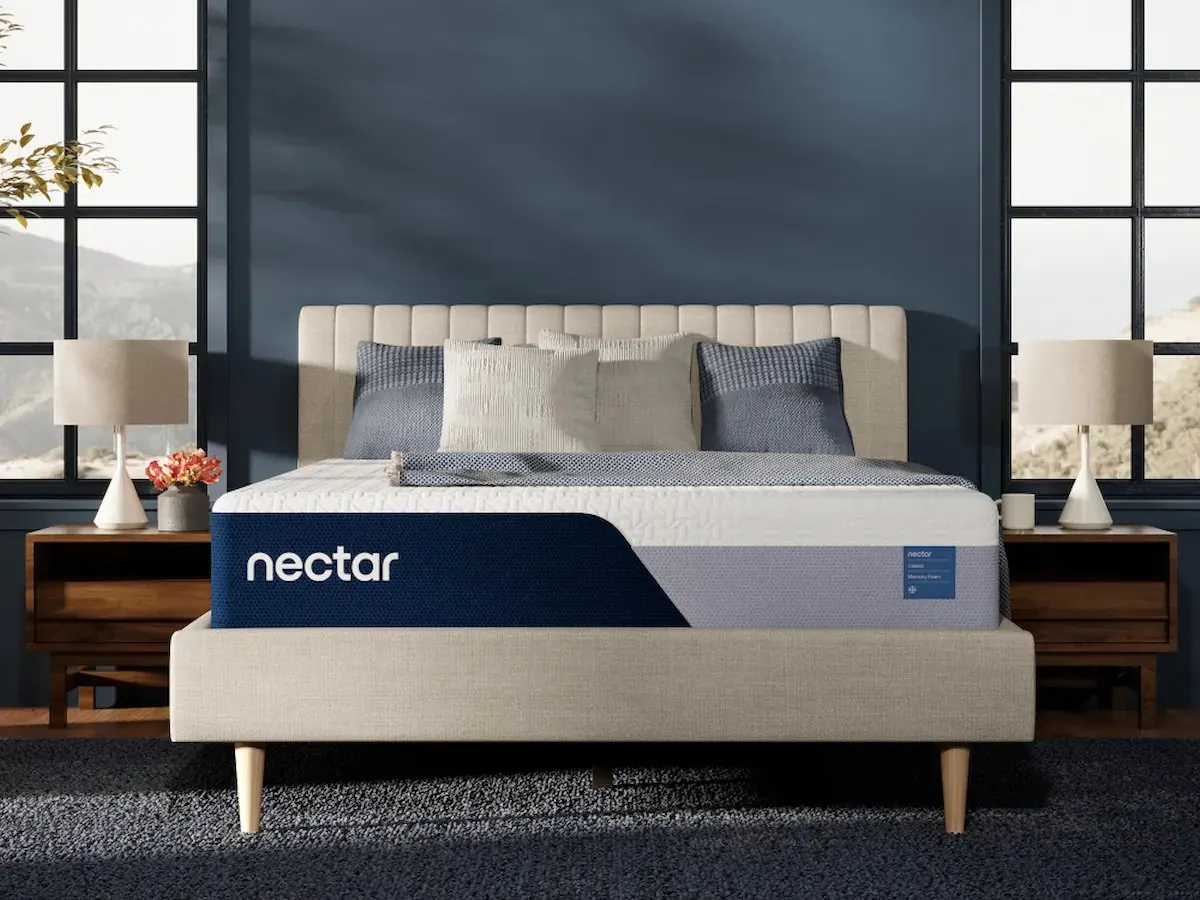
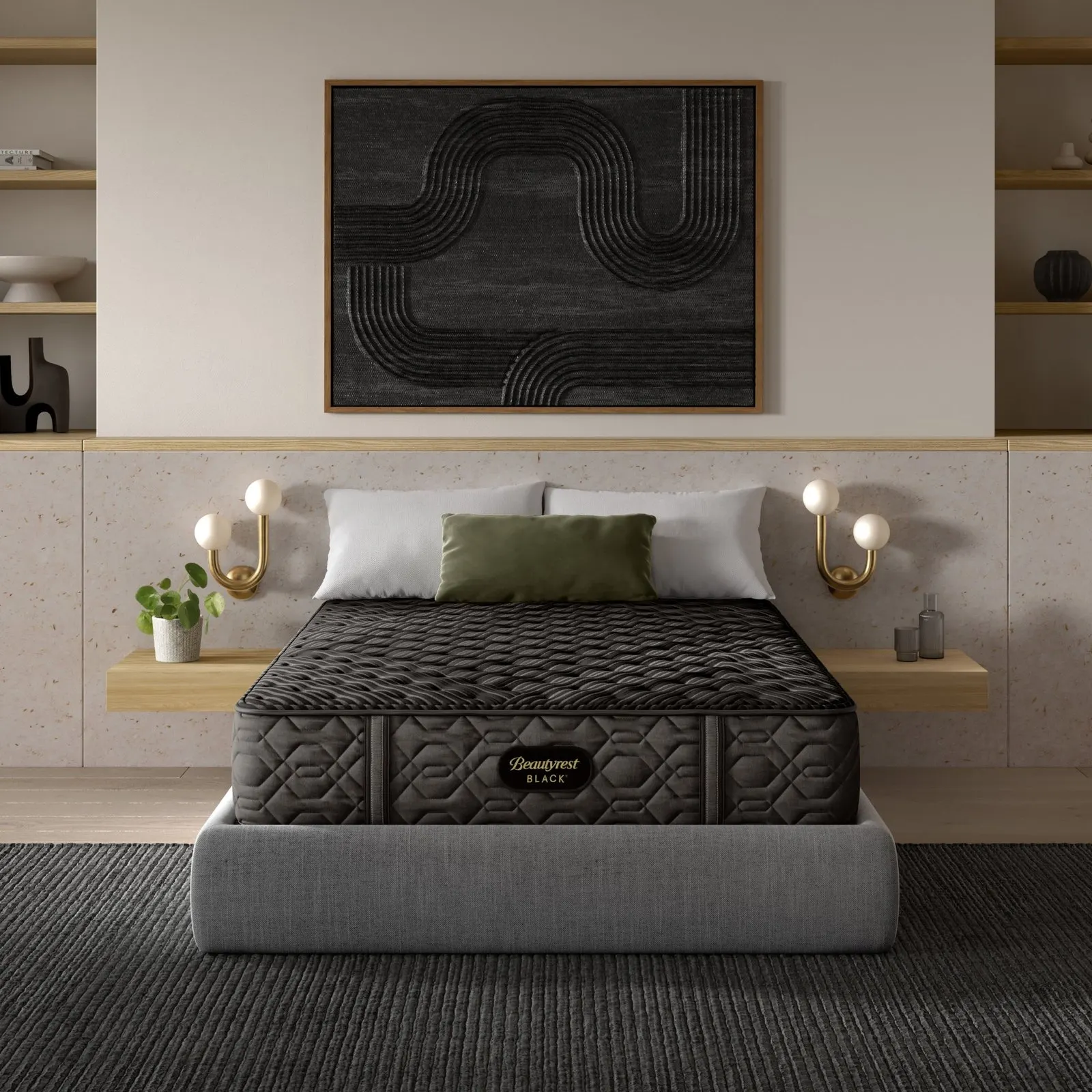
Side-by-side mattress testing · 144+ comparisons published
Quick Specs Comparison
Key Advantages
Why Choose Nectar
- Up to $3,000+ cheaper at Queen
- Forever warranty vs. 10 years
- Better motion isolation for couples
Why Choose Beautyrest
- Pocketed coils deliver superior edge support
- Cooler sleep for hot sleepers
- Available in stores for in-person testing
Lab Verdict
Cooling was a wash — both mattresses landed within half a degree of each other after 60 minutes of body heat. Couples should note that the Nectar dampened motion more aggressively (0.06g peak vs. 0.1g). Pressure mapping put both beds well under the 32 mmHg capillary-closure threshold for side sleepers. Perimeter compression was nearly identical — neither bed is the obvious pick on edge support alone. Beautyrest returned more energy on rebound (57% vs. 40%), favoring combo sleepers.
| Metric | Nectar | Beautyrest | Edge |
|---|---|---|---|
| Cooling (60-min Δ°F) | 3.3°F | 2.9°F | Beautyrest |
| Motion isolation (g) | 0.06g | 0.1g | Tie |
| Edge sinkage | 2.1" | 1.9" | Beautyrest |
| Shoulder pressure (mmHg) | 29 mmHg | 28 mmHg | Beautyrest |
| Response time (s) | 1.2s | 0.6s | Beautyrest |
| Off-gassing | 1 days | 2 days | Nectar |
Median of 3 trials, 68°F climate-controlled lab. DH/KW / NL/KW · scoring vv2.1.
In-Depth Analysis
Nectar and Beautyrest aren't really competing at the same price point. A Queen Nectar Classic costs $649 on sale; a Queen Beautyrest Black sits at $1,999 on sale (and the L-Class and K-Class can stretch to $3,599+ at King). What they share is a target customer: someone who wants a 'lifetime mattress' rather than a $200 throwaway. They just answer that brief very differently — Nectar with the longest trial and warranty in the industry, Beautyrest with engineering most direct-to-consumer brands can't match.
Beautyrest Black is the more refined mattress on every measurable axis except price and motion isolation. Our lab data is decisive: 2.2°F cooler at 60 minutes, 1.8 inches less edge sinkage, 0.4 inches flatter spinal alignment for our 230 lb back-sleeping tester, and a body-impression score (0.2 in after 30,000 roller cycles) that's the best we've recorded under $3,000. The coil-on-coil construction — micro-coils on top of pocketed support coils — is the architecture that traditional luxury brands like Stearns & Foster and Aireloom also use, and there's no DTC bed-in-a-box equivalent at this price.
Nectar's counter-argument is value plus motion isolation. For couples on mismatched schedules, the 0.05 g motion transfer is exceptional — about 3× better than Beautyrest's pocketed coils. Combined with the 22 mmHg shoulder pressure for strict side sleepers, Nectar is genuinely the better mattress for a specific buyer: lightweight side sleeper, very light-sleeping partner, tight budget. That buyer should not pay $1,300 more for the Beautyrest.
Everyone else benefits from the upgrade. Hot sleepers will feel the 2.2°F surface-temperature difference within a week. Combination sleepers will feel the 3× faster rebound every single time they roll over. Heavier back and stomach sleepers — anyone above roughly 200 lb — will sleep with measurably better spinal alignment on the Beautyrest. And sitters who use the edge of the bed for getting dressed will appreciate the 1.4-inch sinkage vs. Nectar's 3.2 inches.
Durability is the quiet long-term argument. Both pass our 30,000-cycle roller test, but Beautyrest's 0.2-inch impression vs. Nectar's 0.7-inch is a meaningful year-5+ difference. Beautyrest's pocketed coils have been in production since the 1920s and the brand has been honoring warranty claims for nearly a century. Nectar's forever warranty looks better on paper, but the company has been around since 2017 — its long-tail enforcement is still unproven.
The honest framing: this is a Toyota Camry vs Lexus ES comparison. Both will get you safely down the road for a decade. The Lexus is measurably better in almost every dimension that has nothing to do with price. If the $1,350 gap doesn't matter to you, buy the Beautyrest. If it does — or if you specifically value motion isolation above all else — buy the Nectar without regret. Both are correct answers depending on the buyer.
Our Verdict
Beautyrest wins on cooling, edge support, spinal alignment, response time, durability, and overall construction quality. Nectar wins on price (by ~$1,350 at Queen), motion isolation, side-sleeper pressure relief, trial length, and warranty. Lightweight side sleepers on a strict budget should buy Nectar. Anyone over 200 lb, hot sleepers, combination sleepers, and buyers with flexible budgets should buy Beautyrest Black.
Buying Advice
Choose Nectar if your budget caps under $1,000, you sleep on your side, and motion isolation is your top priority
Choose Beautyrest Black if your budget reaches $2,000+, you weigh over 200 lb, sleep hot, or change positions often during the night
Hot sleepers should not buy Nectar regardless of price — the 5°F surface rise is real and a cooling topper only partially fixes it
Always test Beautyrest in a retail store before buying — the price point justifies the trip and you'll be far less likely to need a return
Couples on mismatched sleep schedules will feel Nectar's motion-isolation edge nightly — Beautyrest's pocketed coils transmit measurably more movement
If you're between models, the Beautyrest Black L-Class (medium) is the most universally-pleasing pick; only consider C-Class if you specifically want firmer support